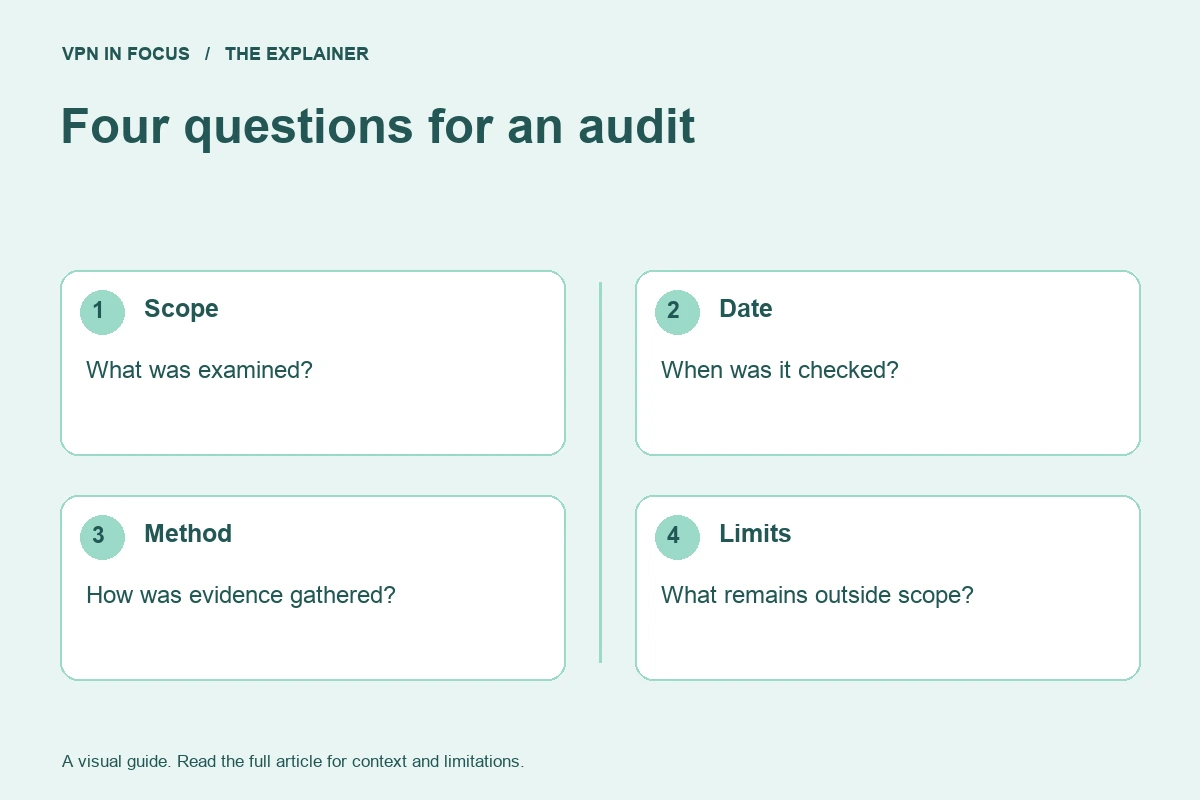
An audit badge can be a useful invitation to investigate. It is not a substitute for the investigation itself. This week’s briefing looks at how to read a published assessment without asking it to prove more than it actually examined.
The practical question is narrow: does the evidence support the particular claim you care about? A report about source code and a report about server-side logging can both be valuable, but they answer different questions. Calling both “audited” does not make their conclusions interchangeable.
Start with the scope
Find the original report or the most detailed available summary. Identify the systems, versions, and dates covered. Look for limitations and exclusions as carefully as the favorable conclusion. If only a short announcement is available, note that your view of the evidence is limited.
For example, an assessment of a VPN’s logging practice does not automatically establish that every mobile app handles every network transition correctly. The result can still be meaningful within its scope. The mistake is expanding it into a universal statement about the entire company or every future release.
Ask what changed afterward
A report describes a period or a version. Later infrastructure changes, acquisitions, app releases, or new features may sit outside that period. This does not make an older audit worthless; it means the date belongs beside the conclusion.
Look for a pattern of understandable disclosure rather than a race to count the largest number of audits. Several assessments with unclear scopes may tell you less than one detailed report that addresses your specific concern. If findings were identified, look for an explanation of remediation and whether it was checked.
Keep the conclusion proportionate
A sensible conclusion might be: “This assessment offers evidence about the systems examined during the stated period.” It should not become: “Nothing can ever go wrong.” Security evidence reduces uncertainty; it rarely removes it completely.
When comparing providers, use the same question for both. Otherwise you may reward one for publishing a readable report while judging another on an unrelated feature. Our methodology explains how we separate provider statements, external evidence, and measurements.
This week’s practical check
Choose one assessment linked by a provider you are considering. Write down its date, scope, assessor, and the claim it supports in four short lines. Add a fifth line for an unanswered question. That small exercise makes the evidence easier to use than a badge alone.
Sources & further reading
This evergreen briefing was prepared on September 24, 2026 for scheduled publication. It does not report a future event. Check linked documentation for changes to product behavior.
About the author

Daniel’s section looks beyond product headlines to the details: how an audit is scoped, what a protocol changes, and where a feature has limitations. Weekly briefings turn these subjects into practical reading and checklists.
Daniel Brooks is a fictional contributor profile created for this publication. This profile does not represent a verified individual or professional credentials. Read our editorial policy.