A VPN connection and HTTPS can be active at the same time because they operate at different layers. Understanding that relationship prevents two common mistakes: assuming a VPN makes website encryption unnecessary, or assuming HTTPS means a VPN can never add value.
The useful question is what each observer can see at each stage. Your device, the local network, the VPN server, and the website occupy different positions along the route.
Follow the outer tunnel
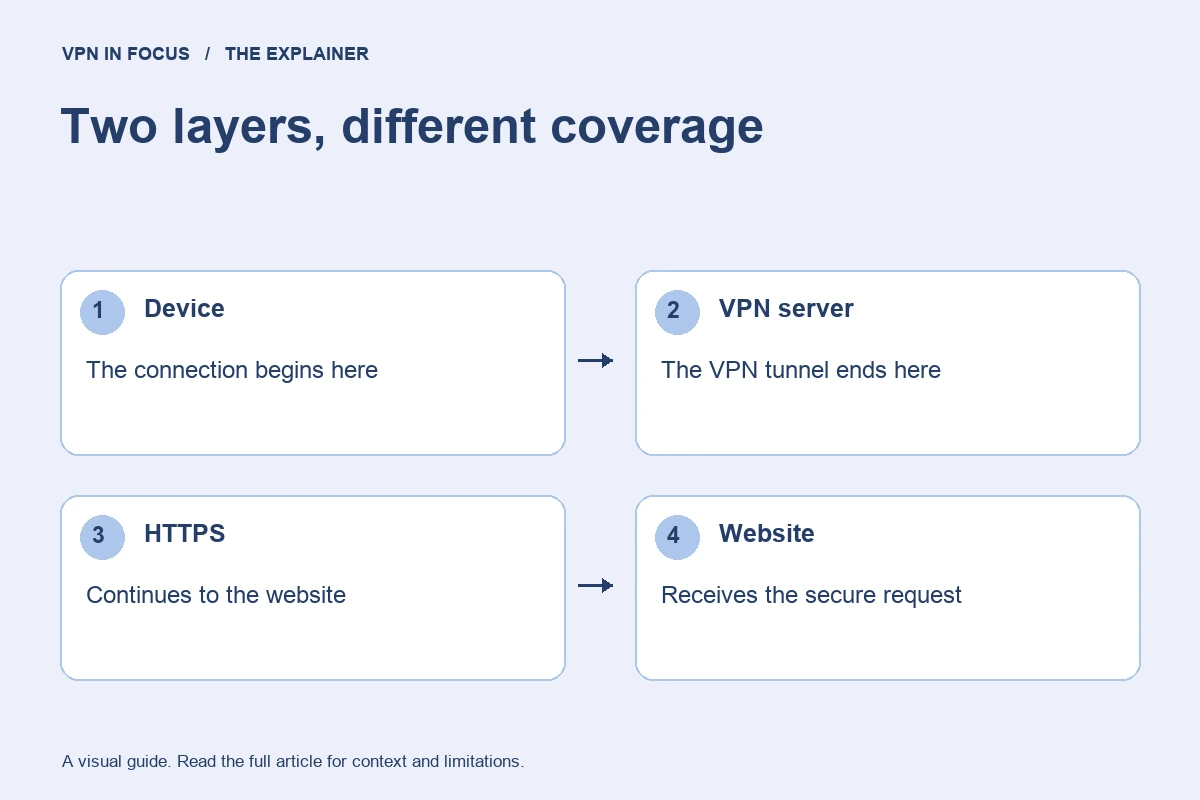
For traffic included in the VPN route, the app creates an encrypted tunnel to a VPN server. The local network can observe that connection and associated timing or volume, but the tunnel protects the traffic carried inside it from ordinary inspection on that segment.
At the VPN server, the outer tunnel ends. The server forwards traffic toward the destination. This is why choosing a VPN provider is a trust decision, not simply a way to remove trust from the internet. A new operator becomes part of the route.
Follow the website connection
HTTPS separately protects the connection to the website endpoint. That protection can continue across the VPN route, rather than stopping at the VPN server. It remains important to use the correct website and pay attention to certificate warnings.
A secure connection does not establish that the website itself is honest. A phishing page can use HTTPS too. The encryption protects delivery to the endpoint; it does not decide whether you should give that endpoint a password or payment details.
Consider a cafe example
You join a cafe network, connect the VPN, and open your bank’s official website. The tunnel and the website’s HTTPS connection provide different protections. If a fake page asks you to sign in somewhere else, neither layer makes that request legitimate.
Likewise, signing in to a normal account still identifies you to that service. A new network route does not erase the account relationship. Cookies and other application-level identifiers remain relevant even when both encryption layers are working correctly.
This week’s practical check
Review the connection diagram and short video. Then explain the two layers in one sentence each: the VPN protects routed traffic to its server; HTTPS protects the website connection. If those boundaries are clear, product claims become much easier to evaluate without exaggeration.
Sources & further reading
This evergreen briefing was prepared on September 24, 2026 for scheduled publication. It does not report a future event. Check linked documentation for changes to product behavior.
About the author

Daniel’s section looks beyond product headlines to the details: how an audit is scoped, what a protocol changes, and where a feature has limitations. Weekly briefings turn these subjects into practical reading and checklists.
Daniel Brooks is a fictional contributor profile created for this publication. This profile does not represent a verified individual or professional credentials. Read our editorial policy.